
By Dr. Mirta Roses Periago
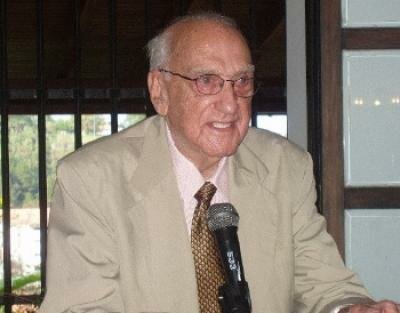 One of the most influential medical experts in leprosy and leishmaniasis celebrated his 100th birthday last week on September 11 – an impressive feat in and of itself. Dr. Jacinto Convit’s work on some of the world’s most challenging public health concerns led to the development of an anti-leprosy vaccine and an immunotherapy for leishmaniasis – not to mention a Nobel Prize nomination and countless awards for his work.
Dr. Convit’s focus on leprosy began in the 1930’s while working in a leper colony in his home country of Venezuela. At the time, leprosy was highly feared as an incurable and highly contagious disease. But in 1940, Dr. Convit gave leprosy patients hope by using blocked Mycobacterium leprae to treat more than 14,000 people. Building on this success, Dr. Convit developed a vaccine for treating and preventing leprosy.
This vaccine led to a multidrug treatment which reduced Venezuela’s leprosy rate to a point that the disease was no longer a public health concern. However, Dr. Convit continues to stress the need for more research and development to fully eradicate the disease.
Dr. Convit’s knowledge of parasitic diseases has also lead to influential work on leishmaniasis — a disfiguring neglected tropical disease (NTD) transmitted by sand flies. He has worked to break down the stigma associated with both leprosy and leishmaniasis – diseases that cause victims to be shunned by their own communities.
Dr. Convit’s dedication to improving millions of lives through global health is truly an inspiration. As he has previously stated, “The only limitation to work is imagination.” Learn more about Dr. Jactino Convit in a video interview that is part of the Pan American Health Organization (PAHO) Reflections project to honor the voices of public health specialists from different fields who have made contributions to health in the Americas.
Dr. Mirta Roses is an NTD Special Envoy for the Global Network and former Director of the Pan American Health Association (PAHO).

