Students from around the world wrote essays as part of their application for leadership positions with END7 for the upcoming academic year. Two students were awarded scholarships to attend the Millennium Campus Conference in Washington, DC. We are publishing the best essays on our blog during the Millennium Campus Conference this week. Runner-up Gerald Oyeki of Makere University (Kampala, Uganda) wrote this essay in response to the prompt “How do you think students and young people can be agents of meaningful change contributing to the fight against NTDs?:”
By Gerald Oyeki
Makere University (Kampala, Uganda)
Nelson Mandela, one of Africa’s greatest statesmen quoted, ‘Education is the most powerful weapon which you can use to change the world.’ Students and young people constitute the most significant medium of change, transformation and generational growth, given that they are sources of energy, charisma and fountains of knowledge and innovation. Thus, their contribution in addressing global crises plays a pivotal role.
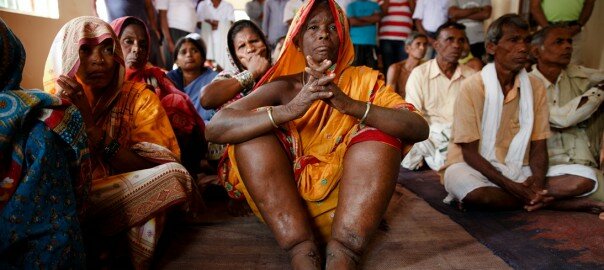
END7 is an international advocacy campaign that seeks to raise the awareness and funding necessary to control and eliminate the seven most common neglected tropical diseases (NTDs), which are a group of chronic and debilitating conditions, caused by parasitic and bacterial infections, by 2020. These diseases include elephantiasis, river blindness, snail fever, trachoma, roundworm and hookworm. They are mainly poverty-driven and are most prevalent in the poorest populations in the world in Asia, Latin America and Africa, with women and children who live in unsanitary environments facing the biggest threats. Such areas have little access to clean water or proper ways to dispose of human waste which are predisposing factors for the occurrence of these diseases. Neglected tropical diseases impair physical and cognitive development, contribute to maternal and child illness and death, and make it difficult to farm or earn a living – thus, the drive to end extreme poverty may not yield fruit if they are not dealt with.
According to the United Nations Human Development Report 2007/2008, Sub-Saharan Africa faces a serious threat for the occurrence and spread of NTDs and thus the urgency for action cannot be ignored. This has led to several integrated efforts to combat the diseases including mass sensitization and education, improvement of basic water, sanitation and hygiene, and mass drug administration as strategies pursued by various stakeholders, policy makers, implementers, funders and the society at large. For instance, in Uganda, the “One Health” concept appreciates and acknowledges that animal health, human health and the environment are a united system that cannot be independent of each other, and that the wellbeing of humans has got a significant dependence on the health of animals and the environment. This has facilitated the fight against zoonotic diseases, like rabies and soil-transmitted helminthes. Programs like the USAID NTD program, the Makerere University College of Veterinary Medicine, Animal Resources and Biosecurity and College of Health Sciences, the Ministry of Health and the Ministry of Agriculture, Livestock Industry and Fisheries have taken lead roles in the fight against these diseases to support Uganda’s goal of eliminating lymphatic filariasis and blinding trachoma by 2020.
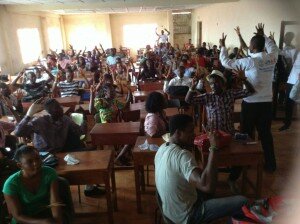
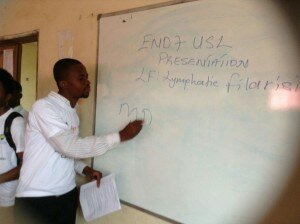
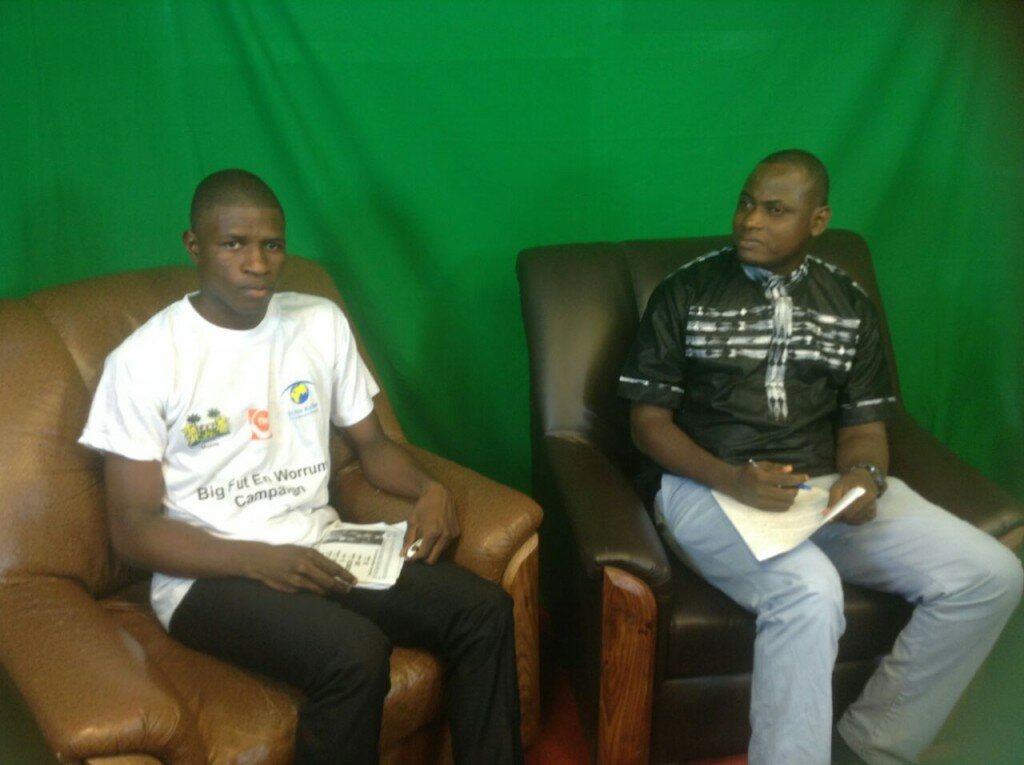
However, the fight to end NTDs is still yet to be accomplished with a number of challenges like low awareness of these diseases, low education levels, and financial constraints for treatment programs. To address these challenges, engaging young people will be key. According to the 2014 United Nations Population Fund (UNFPA) ‘State of the world’ report, Sub-Saharan African countries have a disproportionally large youth cohort. In fifteen countries in sub-Saharan Africa, half the population is under age 18. UNFPA’s review of youth-related policies in these countries suggest that the vast majority have committed to investments in youth-related initiatives and recognize their importance. Students and the youth population are in a strong position to create awareness NTDs and how they can be treated and prevented, actively participate in mass drug administration campaigns, influence government policy and priorities towards funding and fighting NTDs through advocacy led by student clubs and associations. One example of a group that could lead this effort is the One Health Students Club at Makerere University College of Veterinary Medicine, Animal Resources and Biosecurity, for which I serve as speaker emeritus. Our group carries out mass vaccination of animals, most commonly dogs, against zoonotic diseases like rabies (an NTD). The Acholi Students Union, for which I’m currently speaker, engages in mass sensitization of the Acholi ethnic group through radio talk shows, school visits and community outreach, which could be directed towards NTD education. Students can also engage in fundraising drives to boost resources for the fight against NTDs. Furthermore, students can advance NTD research at their universities.
The Millennium Campus Conference is a rich platform for me to use my oratory and leadership skills to interact with peers involved in international development, share knowledge, and convince student leaders from other parts of the world, of all different backgrounds – from both low, middle, and high income countries – of the urgency to eliminate NTDs, and how an integrated global youth approach could help accomplish this goal.