By Ishmael I. T. Jalloh
END7 Campus Leaders Council Representative, University of Sierra Leone
Ishmael I. T. Jalloh is a pharmacy student at the University of Sierra Leone (USL) College of Medicine and Allied Health Sciences. He launched an END7 chapter at his school last fall and with his peers launched additional chapters at USL Institute of Public Administration and Management and Fourah Bay College, creating a growing movement of students and young people committed to seeing the end of NTDs in Sierra Leone.
In May, these students embarked on an 11-day social mobilization and campus engagement campaign to raise awareness about a major mass drug administration (MDA) campaign to prevent lymphatic filariasis (elephantiasis). Through visits to local schools and colleges, media outreach, and creative communication, the students encouraged everyone in their community to participate in the MDA – and even helped with drug distribution in some areas.
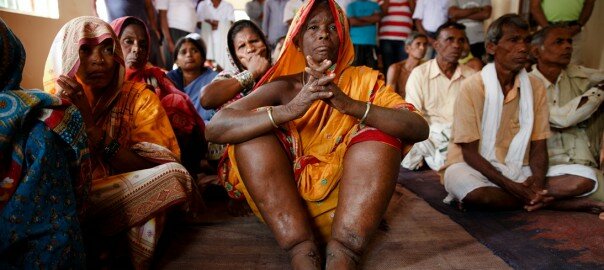
Lymphatic filariasis (LF) is caused by infection with one of three species of filarial nematode (Wuchereria bancroft i, Brugia malayi or B. timori) that are transmitted by mosquitoes. Adult worms live almost exclusively in humans and lodge in the lymphatic system. Repeated mosquito bites over several months to years are needed to become infected with LF. The infection commonly acquired during childhood but usually manifests during adulthood as hydrocele, lymphoedema and elephantiasis.
All the districts in Sierra Leone are endemic for LF ( >1% prevalence), and it is a leading cause of permanent disability in the country. Communities frequently shun and reject women and men disfigured by the disease. Affected people frequently are unable to work because of their disability, and this harms their families and their communities.
To combat LF, preventive chemotherapy through mass drug administration (MDA) of ivermectin and albendazole started in 2008 in western rural Sierra Leone, but was interrupted in 2014 due to the Ebola outbreak. MDA was restarted in October 2015 and continued in May 2016.
END7 is an international advocacy campaign of the Sabin Vaccine Institute with student chapters active around the world. In May of 2016, END7 student supporters at the University of Sierra Leone (USL) led an 11-day campaign to raise awareness and educate students about the LF MDA in Western Area, Freetown, Sierra Leone.

The END7 USL team prepares to launch their social mobilization campaign.
The objectives of the social mobilization and campus engagement campaign were to:
- Increase public awareness of the MDA
- Educate heads of colleges and students on the importance of MDA
- Educate heads of colleges and students about the drugs being distributed (ivermectin and albendazole)
- Advocate to District Health Management Team so that community health workers would be sure to take these drugs to the colleges
- Encourage heads of colleges and students to take these drugs
The social mobilization and awareness raising targeted people in authority and the most influential people in the colleges and campuses: heads of colleges, deans of faculties, administrative assistants, wardens of Colleges, Student Union presidents, and leaders of Christian organization, Muslim organization and other recognized organizations in the colleges. By targeting these leaders, we hoped to encourage them to use their influence to encourage many more people to participate in the MDA.
The awareness raising and campus engagement campaign started on the May 20 and ran until May 31. In that time, the END7 USL team of student leaders visited eight colleges in Freetown. We started at the Milton Margai College of Education and Technology, Congo Cross campus. The END7 USL team met with the student governor, Dean of Campus, Mr. Umaru Bah and students in various classes of the college to educate students about LF and the importance of the MDA.
Next, at Milton Margai College of Education and Technology, Goderich, the END7 USL team met with the student Union President Bilal Afiz Kabba, Ag. Registrar of the college, Mr. Sherifu Bangura, the Vice-Principal of the College, Dr. Tabita, and students gathered at the college hall. END7 students raised awareness and educated the students about the MDA. The END7 team also advocated to the Vice-Principal to include NTDs in the college curriculum.
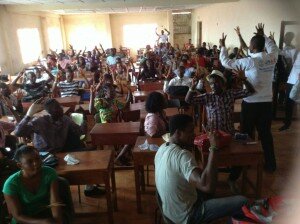
The END7 USL team meets with students in a college hall to educate them about the MDA
At Liccsal Business College, the END7 USL team met with the Vice-Principal Dr. Roland Buck, the Assistant Director of student’s affairs, Ibrahim Bangura, and Mr. Benjamin Lebbie, as well as many students of the college.
Then, the END7 team visited the Wilberforce Community Health Center to encourage community health workers based there to treat the students in the surrounding colleges during the MDA. We wanted to make sure that all of our peers would have the chance to receive the drugs they need to stay safe and healthy.
Next, at Freetown Teachers College, the END7 team met with the Registrar, M.I. Sesay, and met with students at the college hall to raise awareness and educate them about the MDA and elephantiasis. At Njala University Freetown, END7 students met with the Deputy Registrar, Christiana Pearce, and visited students in their classes.
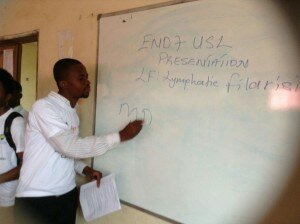
Students gave presentations on LF to encourage students to participate in the MDA.
At the University of Sierra Leone College of Medicine and Allied Health Sciences, after raising awareness about the MDA, END7 student leaders actually assisted in the distribution of the drugs on campus, working with the pharmacy board team to distribute the drugs to administrative staff at the college.
When we visited the University of Sierra Leone Institute of Public Administration and Management, they were in the middle of their examination period, which made it more difficult to reach students with our message. So, we spoke to administrative staff and students who were around on campus. Then, we traveled to Parliament Hospital to advocate for the MDA team there to visit the IPAM campus clinic. We succeeded in bringing the MDA team to treat students at IPAM, but unfortunately, when they arrived on campus, students were not around because of the examination period.
Fourah Bay College was also in the middle of an examination period when our team visited campus, so we made use of the public address system at the nearby airport terminal that was playing the message of the MDA, and met with some administrative staff and students in their classrooms.
In addition to our campus visits, END7 USL was also involved in media outreach to promote the MDA. As president of END7 USL, I was interviewed on a program on Star Television Network to raise awareness of LF and educate Sierra Leoneans about the MDA.
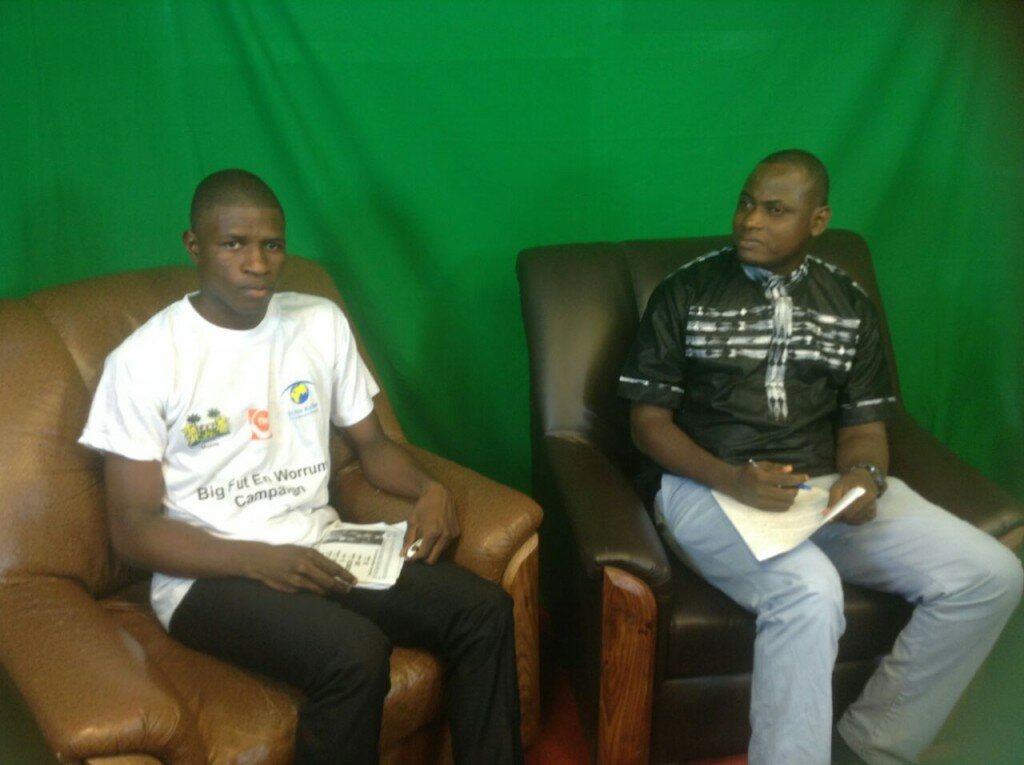
Ishamel being interviewed on the Star Television Network
The END7 USL team faced a few challenges during the social mobilization campaign, as this was the first time we planned activities to support an MDA. One of our greatest challenge was advocating to community health workers to take drugs to the colleges so university students could participate in the MDA. Eighty percent of the colleges we visited were treated during the MDA, but this still leaves many students without access to treatment. We will continue our activities to raise awareness of these important public health campaigns, encourage our peers and fellow community members to participate, and advocate to make sure everyone has the chance to be part of MDA campaigns so Sierra Leone can end NTDs for good.
We want to offer special thanks to Hellen Keller International, Sierra Leone for providing the funding and support for us to carry out our social mobilization and campus engagement activities, and a big thank you to the Ministry of Health and Sanitation District Health Management Team for a successful MDA!
Follow END7 USL on to learn more about their work and see more pictures from their campaign, and check out END7’s Success Stories Factsheet on Sierra Leone to learn more about progress being made against NTDs in the country. If you’re a student looking to get involved in the fight against NTDs, check out our ideas and resources!