by Navneet Anand and Anuradha Singh, GreyMatters Communications
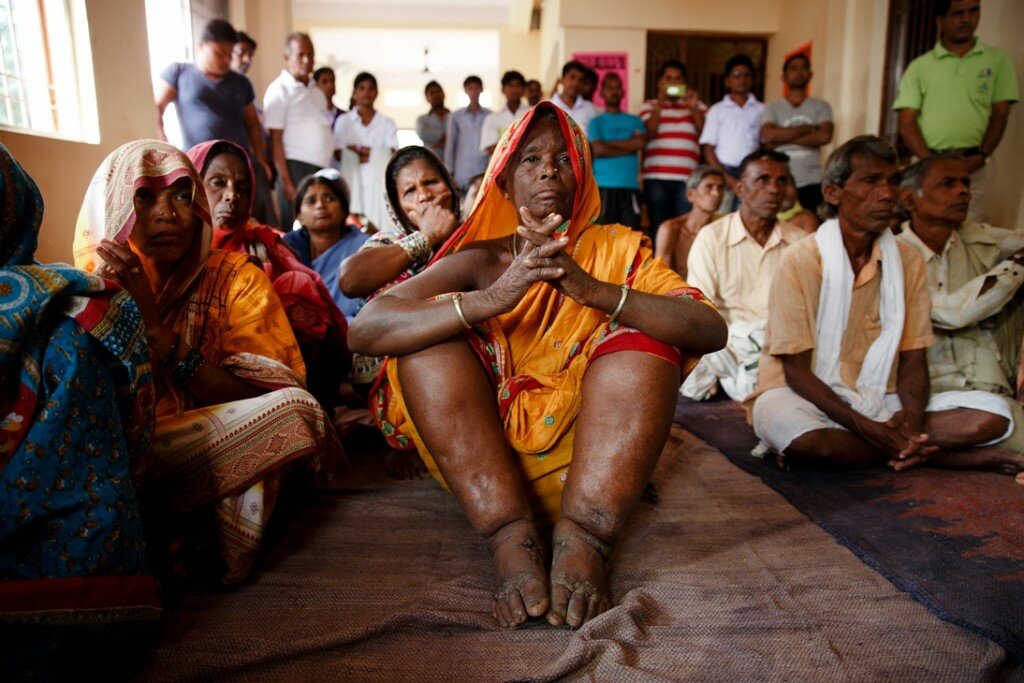 Recently Global Network for Neglected Tropical Diseases (GNNTD) partnered with us at GreyMatters Communications to run a media awareness program on Lymphatic Filariasis (LF) in India. We took a group of journalists to two affected villages in Odisha to provide them exposure about the problem as well as help them evaluate challenges towards its complete elimination.
The Global Network for Neglected Tropical Diseases, an initiative of the Sabin Vaccine Institute, works to raise the awareness, political will and funds necessary to control and eliminate neglected tropical diseases (NTDs).
Often falling beyond the purview of mainstream media, like many other compelling problems in the country, LF has severe enormity and has persisted in India as well as other countries of the world for many years.
Not many would be aware that LF is the world’s second leading cause of long-term disability. Although filariasis does not kill, it causes debility and imposes severe social and economic burden to the affected individuals, their families and the endemic communities. According to one estimate at one point in time 120 million people in 83 countries of the world were infected with lymphatic filarial parasites, and it was estimated that more than 1.1 billion (20% of the world’s population) are at risk of acquiring infection. Over 40 million people are severely disfigured and disabled by filariasis and 76 million are apparently normal but have hidden internal damage to lymphatic and renal systems. According to the World Health Organization, India, Indonesia, Nigeria and Bangladesh alone contribute about 70% of the infection worldwide.
Indigenous lymphatic filariasis cases have been reported from 20 States/UTs across 250 districts which were identified as endemic for filariasis with a population of about 600 million at risk. In India, a special program to eliminate lymphatic filariasis was launched in 2004 covering 202 endemic districts in 20 States/Union Territories and subsequently scaled up to cover all the 250 (now 255) endemic districts targeting a population of about 600 million.The population coverage during MDA has improved from 73% in 2004 to 83% in 2013, according to a document on National Roadmap for Elimination of LF by Ministry of Health.
It is rather heartening to note that the overall microfilaria rate has reduced from 1.24% in 2004 to 0.29% in 2013 (Prov.) at national level. Out of 250 districts 203 districts have reported overall microfilaria rate to less than 1%. Out of remaining 52 districts, 31 need high priority for focussed intervention as these districts have been persistently reporting microfilaria rate above 1%. Ganjam and Puri in Odisha, where we travelled, are also among the high-incidence districts in the country.
It was rather painful to come across two cases of Lakhender Swain and Kointa Swain in Kapileshwarpur village in Puri. Afflicted with this distressing disease, the two have wasted their most productive years attending to deal with this disabling disease. “I had a dream for my life but the tyranny of this disease was such that I was rendered helpless. For over 20 years now, I have lived with this heaviness in the leg and associated problems including social taboos and boycotts,” rued Lakhender, who is 45 only. Kointa, in her 60s, recalls how at one point she was extremely active and used to work “effectively” till destiny willed otherwise.
“NTDs like lymphatic filariasis hold people back not just physically, but also socially. Misunderstandings about what causes the disease, how it is transmitted and what its effects are can lead to stigma and social exclusion. This lack of understanding can cause communities to push LF patients to the margins, excluding them from employment or educational opportunities, from community festivals or celebrations and making it difficult to marry. The impact can go beyond the LF patient to also affect family members of LF patients. Self-stigma is also a problem and can impact a patient’s mental health. Social isolation compounds the impact of the infection, keeping people from trying to achieve their aspirations or have hope for the future. Although LF tends to be visible in rural and poor communities, LF is spread through mosquitos, like dengue and malaria, so anyone can be infected,” said Nandini Pillai, Programs and Operations Officer, GNNTD.
However, thanks to some serious and sustained intervention by the government as well as work by agencies like GNNTD as well as NGOs like CASA (Church’s Auxiliary for Social Action), the problem is well contained and India may well be on the verge of soon eliminating the disease altogether.
One of the key programs of the Government is Mass Drug Administration where all those at risk are administered medicine free of cost.
“The treatment is a weight-based dose of diethylcarbamizne (DEC), and a single pill of albendazole, to everyone over the age of 2 years and not ill or pregnant. Both drugs are anti-parasitic medications which prevent and expel parasites. These medicines also protect from intestinal worm infections. The treatment is safe and free and delivered to communities through ASHA workers and other community-based drug distributors. The drugs are donations from major pharmaceutical companies, like GlaxoSmithKline (GSK), or procured in India from WHO approved companies. They are completely safe,” informed Shaliesh Vaite, National NTD Advisor, GNNTD.
The 2015 MDA is underway nationwide from December 14-20.
The medical approach to defeating NTDs is through a set of medications donated by major pharmaceutical companies for free distribution to communities in need. “In India, state governments locally procure some medications and submit their requests for donated drugs to the central government, which then works with WHO to order and deliver the drugs. Community drug distributers are responsible for going door to door to hand out the drugs and ensure that people take them properly. This grassroots method for treating and protecting against NTDs takes the partnership of the whole community working in tandem, and ensures that nobody is left behind,” added Kelly Toves, Communications Officer, GNNTD.
Along with this, if media also undertakes to write more often and inform people about the ways to deal with this scourge, the process of elimination will be faster.
This post was originally published on Communicate, Connect.