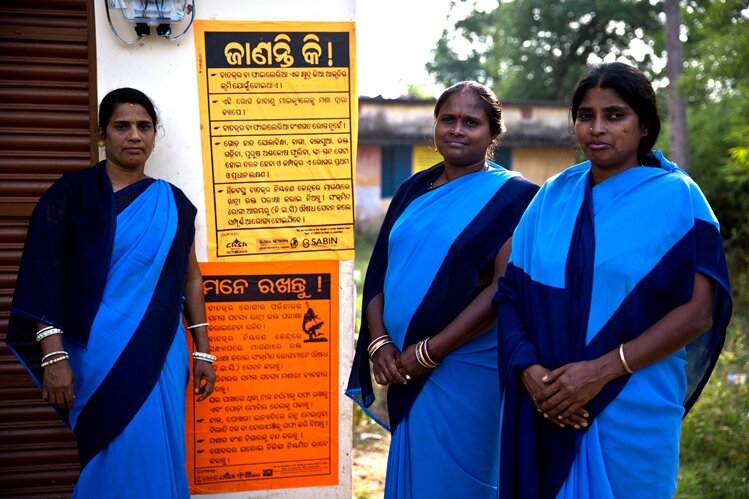
This spring, we awarded nearly $400,000 in new grants for neglected tropical disease (NTD) control and elimination activities in 2016.
This funding is made possible by generous donations to END7, an international advocacy campaign that seeks to raise the awareness and funding necessary to control and eliminate the seven most common NTDs. The campaign is managed by the Global Network for Neglected Tropical Diseases and 100% of donations to the END7 campaign go straight to NTD programs. Donations to Sabin Foundation Europe, a partner of the U.S.-based Sabin Vaccine Institute and the Global Network also helped make these grants possible.
The grants will make a significant impact in supporting integrated NTD programs in six countries. All projects are coordinated with Ministries of Health and/or the World Health Organization in each country. Many of the projects include mass drug administration (MDA) for the most common NTDs and training of health care workers. These projects are expected to benefit nearly six million individuals at risk from NTDs and train tens of thousands of health workers and volunteers to lead the NTD control and elimination effort into the future.
Awarded to existing efforts that faced a funding gap, these projects will have a lasting impact on improving and expanding existing programs to reach ambitious NTD control and elimination goals in Africa, Asia and Latin America – the regions with the largest NTD burden:
Nigeria
$50,000 to support integrated MDA for seven NTDs, administered by Sightsavers with the support of the Federal and Kebbi State Ministries of Health. Nearly 5.9 million people will receive donated medicine in Kebbi state, in northwest Nigeria, where all seven NTDs are widespread. Sightsavers will continue their successful MDA in the region and expand to new areas.
Somalia
$66,200 to support the first integrated MDA in five regions of southwestern Somalia by the new NTD Program of the Ministry of Health and Human Services. The MDA will target schistosomiasis (snail fever), ascariasis (roundworm), hookworm and trichuriasis (whipworm) among school-age children and adults in areas of high prevalence. The NTD Programme was established in 2015; success this year will help scale up the delivery of donated medicine to the rest of the country.
Cote d’Ivoire
$28,789 to support water, sanitation and hygiene education to prevent NTDs in Cote d’Ivoire, administered by Helen Keller International. More than 7,000 health workers, school teachers and community health volunteers will be trained to reach more than 2.5 million people.
Guyana
$111,146 to support MDA to eliminate lymphatic filariasis in the most populous region of the country, administered by the Pan American Health Organization and the Ministry of Public Health. Guyana is on track to eliminate lymphatic filariasis (also known as elephantiasis) by 2020. These funds were raised for END7 by the Sabin City Group in London.
India
$60,546 to assist a local NGO, Churches Auxiliary for Social Action (CASA), to expand their successful efforts to treat and prevent lymphatic filariasis to West Bengal. This grant will enable CASA to train community members to manage the swelling and disability that often results from later stages of lymphatic filariasis. Each infected patient will receive a hygiene kit with soap, a towel and antifungal ointment and be shown how to care for themselves to reduce swelling. CASA will also promote the government’s annual MDA targeting 500,000 people for lymphatic filariasis treatment in West Bengal.
Myanmar
$75,645 to assist the Department of Public Health to determine where MDA for lymphatic filariasis has succeeded and can be concluded. Nine districts with a population of nearly 7 million have already conducted more than five rounds of MDA for lymphatic filariasis. Officials will determine whether transmission has been interrupted.
The Global Network team reviewed 37 proposals from a range of partners tackling NTDs around the world and selected projects with the potential to have the most lasting impact, leverage further investment and bolster country-led efforts to eliminate NTDs.
To date the Global Network has awarded more than US$1 million in grants to 19 partners. From individual donors contributing $5 a month to student groups raising $10,000 over the course of a school year, the END7 campaign has mobilized a diverse and growing community of supporters from countries around the world dedicated to supporting the fight against NTDs. Together, these contributions are moving the NTD elimination effort forward by helping communities set up treatment programs they can run themselves. END7 supporters fill funding gaps in successful NTD treatment programs, highlighting the tremendous impact of this inexpensive treatment and the power of partnership in the fight against NTDs.